





Published on 30 July 2026
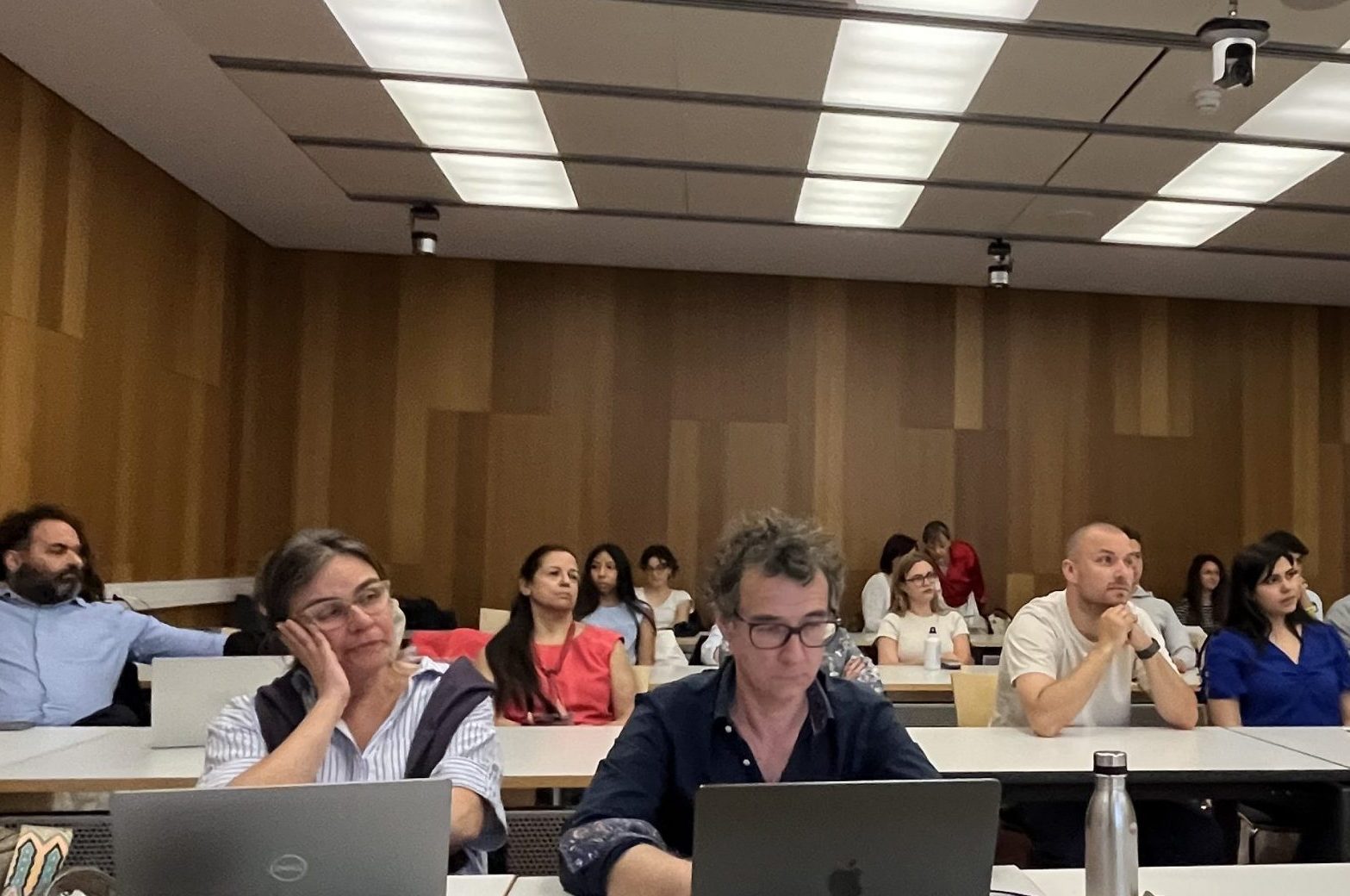 On 4–5 May 2026, the Faculty of Economics and Management at the Free University of Bozen-Bolzano (unibz) hosted the conference “From Public Engagement to the City-University: A Narrative through Video, Theory and Case Studies,” held at the university’s Bolzano city-centre campus. Organised within the interdisciplinary research project Unicity, the event marked the project’s conclusion and offered an interdisciplinary reading of the democratic innovation processes now unfolding in European cities.
The conference’s starting point was a deliberate shift in perspective: rather than asking what the city can do for its students, the question became what students are already doing for the city. Their everyday practices — from how they use urban space to the social and cultural relationships they build — contribute substantially to city life, often without being visible or formally recognised.
“University cities today represent one of the most dynamic spaces for redefining democracy, where law meets emerging social practices and accompanies their evolution,” said Stefania Baroncelli, co-coordinator of the Unicity project. “It is not just about observing these processes, but about understanding their transformative potential for institutions.”
“Bolzano is a particularly interesting case because it makes visible, on a smaller scale, dynamics common to many European cities,” added Daniele Ietri. “From the relationship between students and residents to access to spaces and services, the city becomes a field of experimentation where data, perceptions and public policy intertwine.”
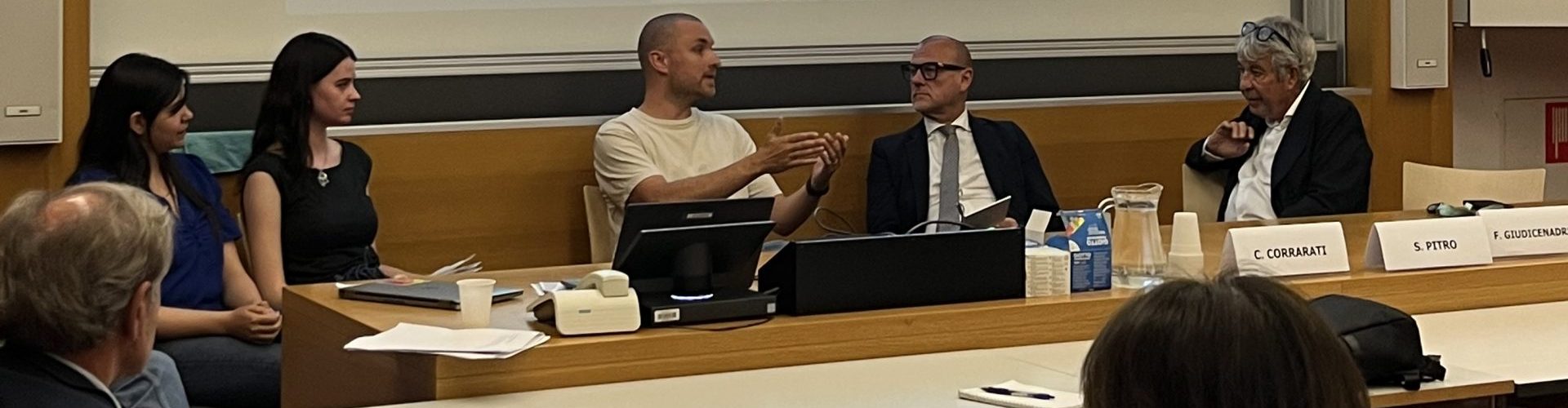
The first day, 4 May, opened with institutional greetings from Mayor Claudio Corrarati, provincial councillor Philipp Achammer, and unibz representatives Federico Giudiceandrea and Alex Weissensteiner, followed by the presentation of the Unicity project’s conclusions. The programme also featured a preview of the forthcoming special issue “Città, università e beni comuni: forme emergenti di democrazia urbana” (Cities, Universities and Commons: Emerging Forms of Urban Democracy), to be published in the journal federalismi.it by Stefania Baroncelli, Monica Rosini and Roberto Farneti.
A highlight of the first day was the screening of “Dossiers,” a video and documentary project by Daniele Ietri and Eleonora Mastropietro, produced with Enece Film. Built around interviews with students at the Free University of Bozen-Bolzano, the film explored what had drawn them to study in Bolzano, how they had settled into the city, the difficulties they had encountered along the way, and their outlook for the future. The screening gave the conference a direct, first-person counterpoint to the day’s more theoretical discussions, grounding the debate on public engagement in students’ own experiences of the city.
The day’s central moment was a round table bringing students together with the city’s Mayor, the university’s President and the provincial councillor for a direct exchange on the future of the university city.
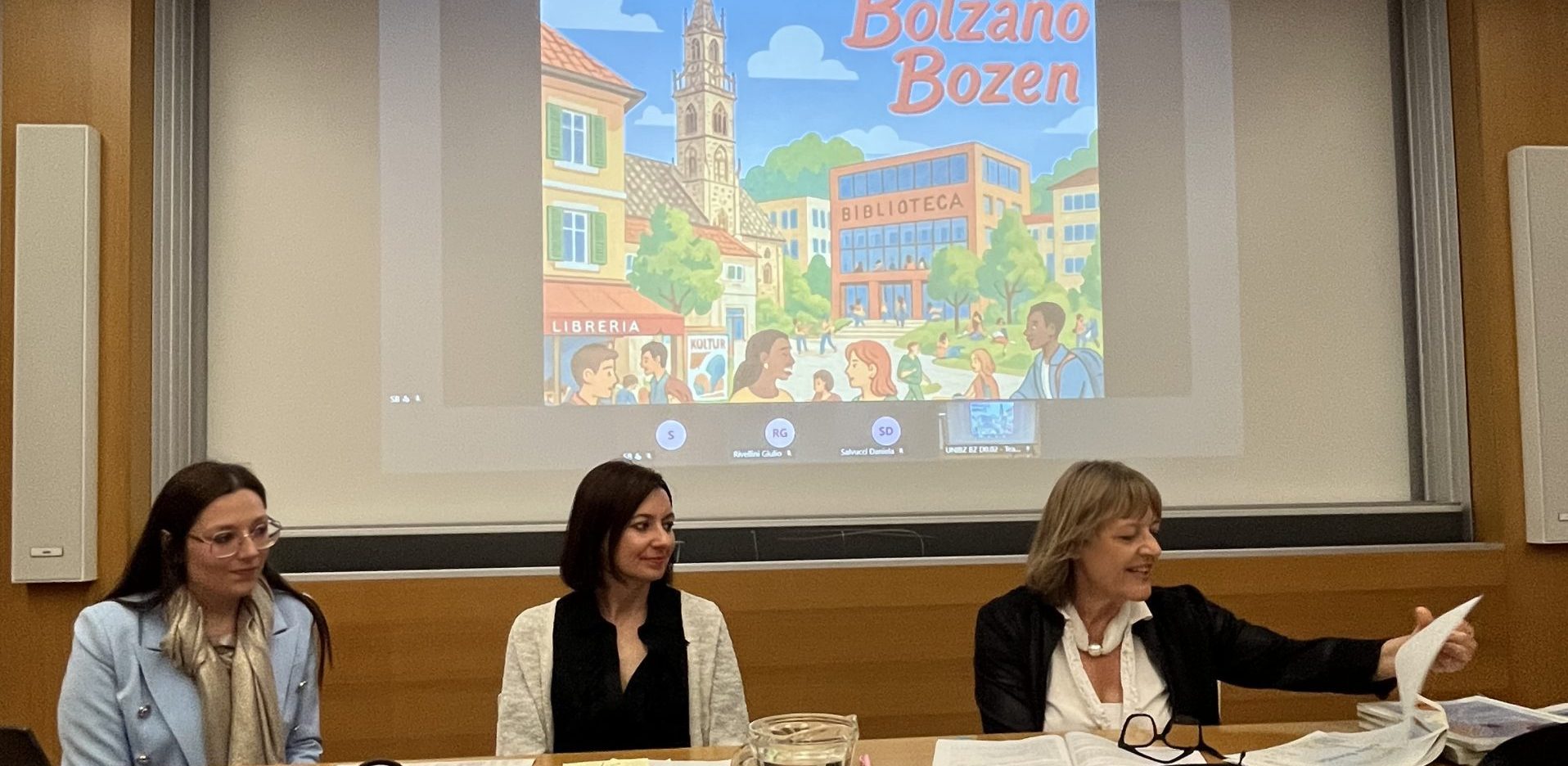 The second day widened the focus to public engagement in international perspective. The morning opened with a session on public engagement in the international context, featuring Elisabeth Gsottbauer, Richard Lang, Alessandro Narduzzo, Giovanni Pernigotto and Leila Ahmad Pour, who addressed how public engagement is defined and measured, co-design between public administration and communities, social innovation, urban resilience to climate change, and public value creation in healthcare. A second morning session turned to public engagement between theory, governance and academia’s “third mission,” with contributions from Elisabetta Bani, Vice-President of APEnet, the Italian network of universities and research bodies for public engagement, as well as Sara Valaguzza, Roberto Farneti and Luca Bizzarri.
The afternoon session turned to concrete local projects. The City of Bolzano presented the participatory procedure behind the city’s Social Plan, a process in which students also took part and which had been launched within the EUnivercities conference hosted in Bolzano in April 2025. The presentation, delivered by Sofia Bonvicini, Milena Brentari, Silvia Recla and Carlo Alberto Librera, showed how the network’s earlier work in the city had translated into a concrete planning tool linking social sustainability and student participation.
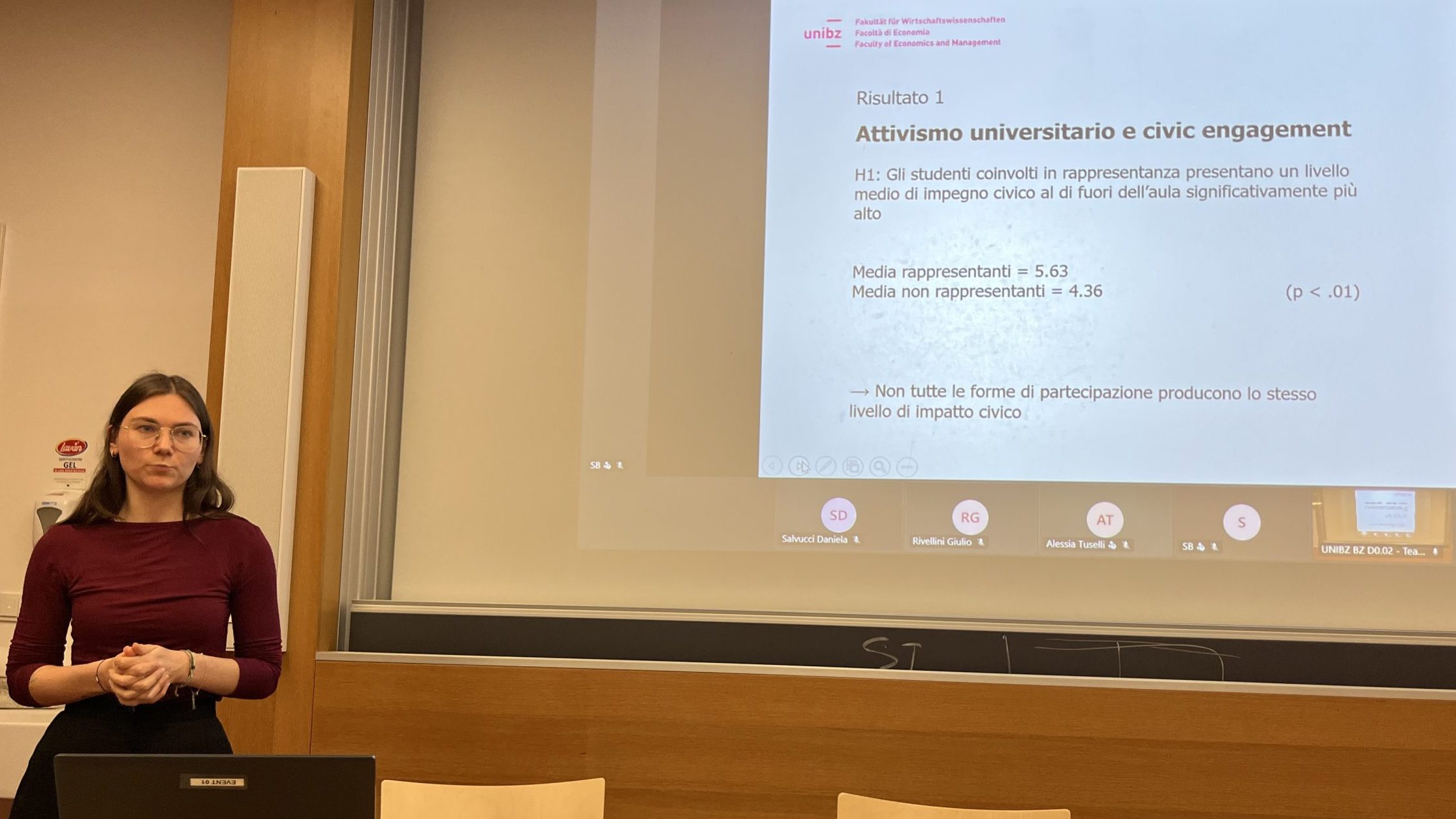
Students and researchers then presented further work grounded in Bolzano’s own experience: Daniela Salvucci and Tobias Boos discussed student topographies of the city, Martina Scala presented student engagement as a form of active citizenship at unibz, Alessandro Nolet Magnante examined co-creation between the university community and local institutions, and Paolo Somigli spoke on classical music initiatives bridging students and residential care homes.
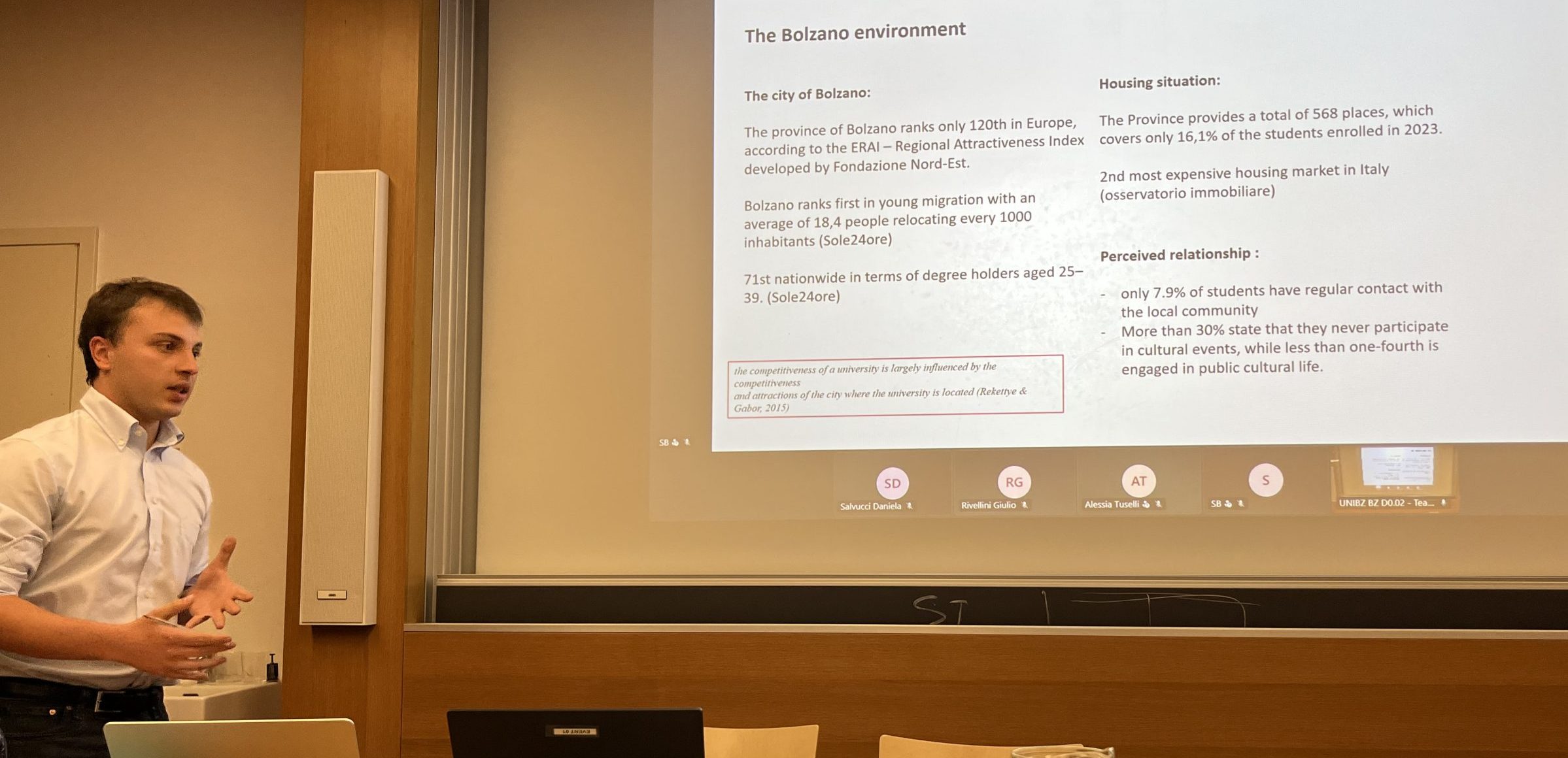
The day closed with a reflection by Daniela Ciaffi on the “third mission” as an ongoing dialogue between universities and their territories. The overarching goal, organisers noted, was to strengthen the dialogue between research, institutions and civil society, restoring to the university city its role as an engine of democratic transformation.
The conference was coordinated by Stefania Baroncelli, Daniele Ietri and Roberto Farneti, with academic secretariat support from Giulio Rivellini, Benedetta Carlotti, and Orsolya Farkas.
